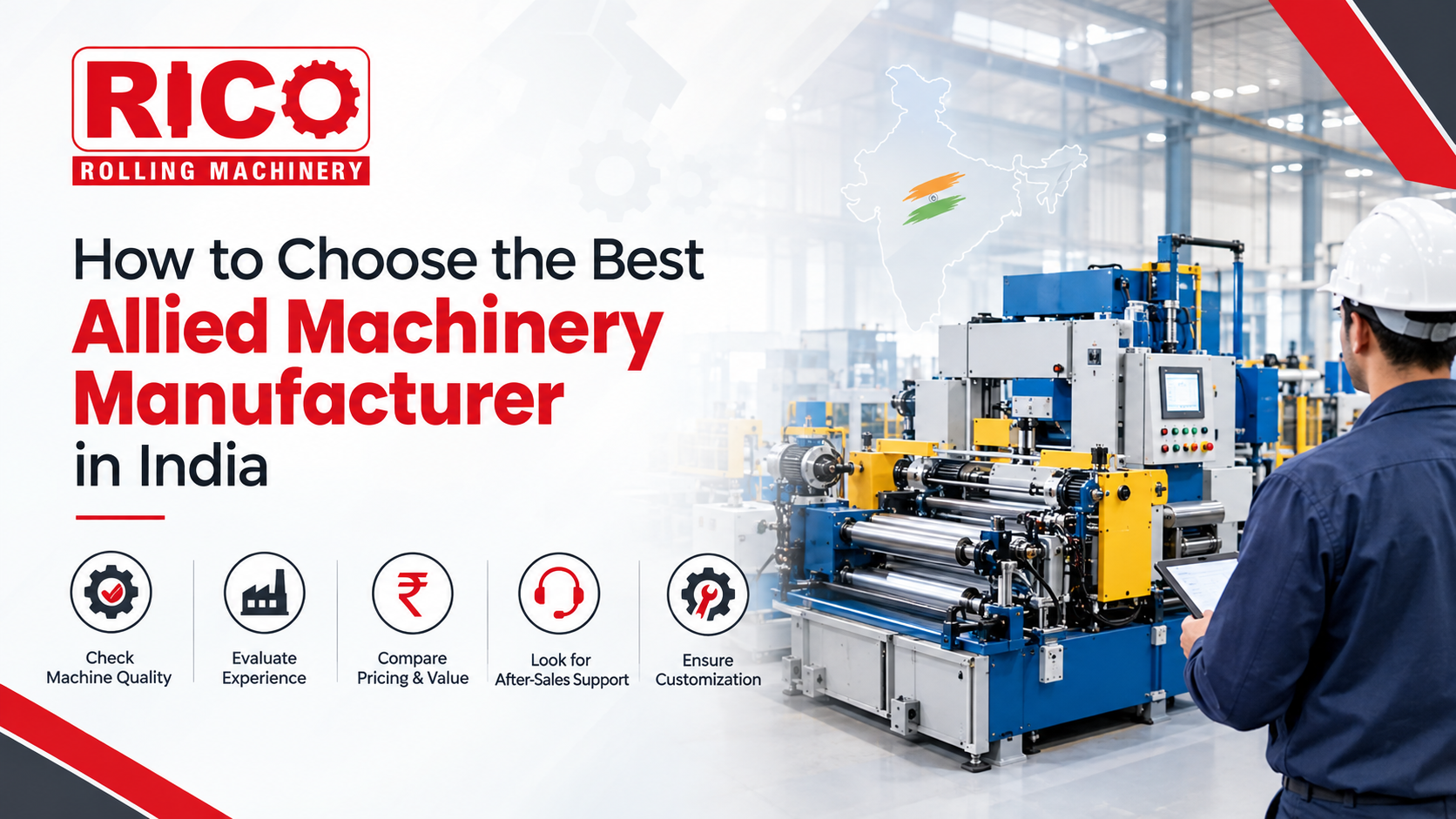
Choosing the right allied machinery manufacturer in Punjab, India, is an important decision for businesses looking to improve production efficiency, maintain product quality, and achieve long-term operational success. Industrial machinery plays a vital role in manufacturing, fabrication, metal processing, engineering, and various other industrial sectors. Selecting a reliable manufacturer can help businesses find suitable machinery, reduce operational challenges, and maintain consistent production standards.
With India’s industrial sector continuing to develop, businesses have access to a wide range of machinery manufacturers offering different products, technologies, and levels of technical support. However, not every manufacturer will meet your specific requirements. Understanding the most important factors can help you make an informed decision.
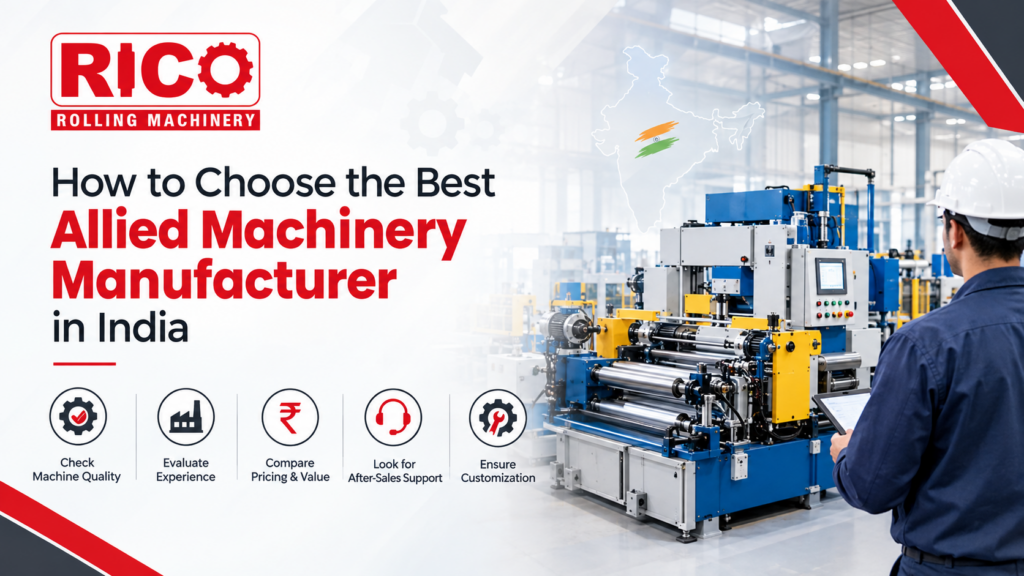
In this blog, we will explore how to choose the best allied machinery manufacturer in India and what to consider before making an investment.
What Is Allied Machinery?
Allied machinery refers to equipment and supporting machines used alongside primary industrial machinery to improve manufacturing processes, material handling, production efficiency, and overall workflow. Depending on the industry, allied machinery may include auxiliary equipment, material handling systems, processing equipment, fabrication support machines, and other machinery designed for specific industrial applications.
These machines help businesses streamline operations, improve productivity, and maintain consistency throughout their production processes.
The right machinery depends on several factors, including the type of industry, production capacity, material requirements, available workspace, and operational objectives.
1. Understand Your Industrial Requirements
Before selecting an allied machinery manufacturer, identify your business requirements. Every industrial facility has different production goals, operating conditions, and technical specifications.
Start by evaluating the following factors:
- Production capacity: Determine the quantity of output your business needs to achieve daily or monthly.
- Application requirements: Identify the specific tasks the machinery must perform.
- Material compatibility: Check whether the equipment suits the materials used in your production process.
- Available space: Consider the dimensions of your facility and the space required for installation and operation.
- Future expansion: Choose equipment that can support your expected production growth.
Having clear requirements will help you shortlist manufacturers that can provide appropriate machinery for your operations.
2. Check the Manufacturer’s Industry Experience
Experience is an important factor when evaluating an allied machinery manufacturer in India. A manufacturer with relevant industry experience may have a better understanding of production challenges, equipment performance, and customer requirements.
Before making a decision, review the manufacturer’s background and assess its experience with machinery similar to what your business needs.
Consider checking:
- Years of experience in the relevant machinery segment
- Previous projects and customer references
- Industries served by the manufacturer
- Technical knowledge and manufacturing capabilities
- Ability to handle customised machinery requirements
A manufacturer’s relevant experience can help you assess whether it is equipped to understand your operational needs and provide a suitable solution.
3. Evaluate Machinery Quality and Build Standards
Machinery quality directly affects performance, reliability, maintenance requirements, and equipment lifespan. Investing in equipment with appropriate construction standards can help reduce unexpected interruptions and support consistent operations.
When comparing manufacturers, ask about the materials used, manufacturing processes, component quality, and inspection procedures.
Important factors to evaluate include:
- Strength and durability of the machine structure
- Quality of mechanical and electrical components
- Precision and consistency of operation
- Safety features and operating controls
- Quality checks performed before dispatch
- Availability of technical specifications and documentation
Where possible, request a product demonstration or inspect the machinery before placing an order. This can provide a clearer understanding of its construction and suitability for your application.
4. Look for Customisation and Technical Expertise
Standard machinery may not always meet the requirements of every industrial operation. Businesses with specialised production processes may need equipment designed or modified according to particular specifications.
A capable allied machinery manufacturer should be able to understand your application and explain the available options.
Depending on the equipment, customisation may involve:
- Machine dimensions and layout
- Production capacity
- Automation and control systems
- Material handling arrangements
- Integration with existing equipment
- Special operational or safety requirements
Discuss your technical expectations with the manufacturer before finalising the order. Clear communication at this stage can help avoid compatibility issues during installation and operation.
5. Compare Pricing and Overall Value
Price is an important consideration, but choosing machinery based only on the lowest quotation can lead to higher expenses later. A better approach is to evaluate the overall value offered by each manufacturer.
The total investment may include more than the initial purchase price. Installation, transportation, operator training, spare parts, maintenance, and energy consumption can also affect the cost of ownership.
When comparing quotations, consider:
- Initial machinery cost
- Installation and commissioning charges
- Warranty coverage
- Maintenance requirements
- Energy efficiency
- Spare parts availability
- Expected operating life
Request detailed quotations from shortlisted manufacturers and ensure that you compare similar specifications. The objective should be to select machinery that meets your requirements while offering a reasonable balance of quality, performance, and cost.
6. Verify After-Sales Service and Maintenance Support
Reliable after-sales service is essential for industrial machinery. Even well-designed equipment requires periodic maintenance, and technical issues may occasionally arise during operation.
Before selecting a manufacturer, understand the support services it provides after delivery.
Ask the manufacturer about:
- Warranty terms and conditions
- Availability of replacement parts
- Technical assistance and troubleshooting
- Preventive maintenance guidance
- Installation and commissioning support
- Operator training, where applicable
- Response procedures for service requests
Accessible technical support can help businesses address equipment problems more efficiently and minimise avoidable production downtime.
7. Check Industry Reputation and Customer Feedback
A manufacturer’s reputation can provide useful insights into its reliability, product quality, and customer service. However, it is important to assess reputation using credible information rather than relying on promotional claims alone.
Research the company through its official website, business profiles, customer testimonials, industry references, and available project information.
You can also ask the manufacturer for references from customers who use similar machinery.
While reviewing feedback, pay attention to recurring comments about product performance, delivery commitments, technical support, and the company’s response to customer concerns.
A careful review of these factors can help you make a more confident purchasing decision.
8. Assess Manufacturing Capabilities and Delivery Timelines
A suitable manufacturer should have the capability to fulfil your order according to the agreed technical specifications and delivery schedule.
Before confirming an order, discuss the manufacturing process and expected timeline. This is especially important when machinery is being developed for a specific industrial application.
Consider asking about:
- In-house manufacturing and assembly capabilities
- Quality inspection procedures
- Production planning and order status updates
- Availability of required components
- Packaging and transportation arrangements
- Installation and commissioning schedules
Confirm the expected delivery date and other important commitments in writing. Proper planning can help your business coordinate machinery installation with existing production activities.
9. Consider Technology, Automation, and Energy Efficiency
Modern industrial operations increasingly focus on productivity, process control, energy consumption, and workplace safety. Depending on your application, machinery with suitable automation and control features may help improve workflow and reduce manual intervention.
When evaluating available options, consider whether the equipment supports your current and future operational needs.
Relevant features may include:
- Automated operating controls
- Monitoring and diagnostic systems
- Energy-efficient components
- Safety interlocks and emergency stops
- Integration with existing production equipment
- Provision for future upgrades
However, advanced technology is not always necessary for every application. Select features that offer practical benefits for your production process rather than paying for functions your business may not need.
10. Review Safety Standards and Technical Documentation
Industrial machinery must be suitable for its intended application and operated according to appropriate safety practices. Before purchasing equipment, review the safety features and documentation provided by the manufacturer.
Depending on the machinery, relevant documentation may include operating manuals, maintenance instructions, electrical diagrams, technical specifications, and applicable conformity or inspection documents.
Check whether the equipment includes appropriate guarding, emergency controls, warning labels, and other necessary protective measures.
Ask the manufacturer to clarify applicable safety requirements and ensure that installation and operation can be carried out in accordance with relevant regulations and workplace procedures.
Common Mistakes to Avoid When Choosing an Allied Machinery Manufacturer
Even experienced buyers can overlook important details when purchasing industrial equipment. Avoiding the following mistakes can help you make a more informed decision.
Choosing based only on price: A low initial cost may not reflect long-term maintenance, energy, or operating expenses.
Ignoring technical specifications: Machinery that does not match your production requirements may create workflow or compatibility problems.
Overlooking after-sales support: Limited access to service and spare parts can increase downtime when problems occur.
Skipping manufacturer verification: Failing to review experience, customer references, and manufacturing capabilities can make it harder to assess reliability.
Not confirming delivery terms: Unclear timelines can disrupt production planning and installation schedules.
Ignoring future requirements: Machinery that cannot accommodate reasonably anticipated changes may limit operational flexibility.
By considering these points before placing an order, businesses can reduce purchasing risks and choose equipment more effectively.
Why Choosing the Right Allied Machinery Manufacturer Matters
The right manufacturing partner can contribute to smoother industrial operations by supplying machinery that matches your production requirements and providing support throughout its working life.
A well-informed selection process can help businesses achieve several benefits:
- Improved productivity: Appropriate machinery can support efficient production workflows.
- Consistent performance: Suitable equipment and quality checks can help maintain operational consistency.
- Better cost management: Evaluating total ownership costs helps businesses plan their investment more effectively.
- Reduced downtime: Maintenance guidance and access to technical support can help resolve operational issues.
- Long-term flexibility: Machinery selected with future needs in mind can support business expansion.
These benefits depend on the machinery selected, how it is installed, and how well it is maintained. Careful planning is therefore essential before making a purchase.
Conclusion
Choosing the best allied machinery manufacturer in India requires more than comparing product prices. Businesses should evaluate manufacturing experience, machinery quality, technical capabilities, customisation options, after-sales service, safety features, and overall operating costs.
Start by defining your production requirements and then compare manufacturers against clear technical and commercial criteria. Review available documentation, ask relevant questions, and confirm important terms before placing an order.
A reliable manufacturing partner should understand your industrial requirements and help you identify machinery that aligns with your operational objectives. By following a structured selection process, you can make a better-informed investment and support the long-term efficiency of your business.
If your business is planning to invest in allied machinery, take the time to assess your requirements carefully and choose a manufacturer based on quality, suitability, service, and long-term value rather than price alone.