
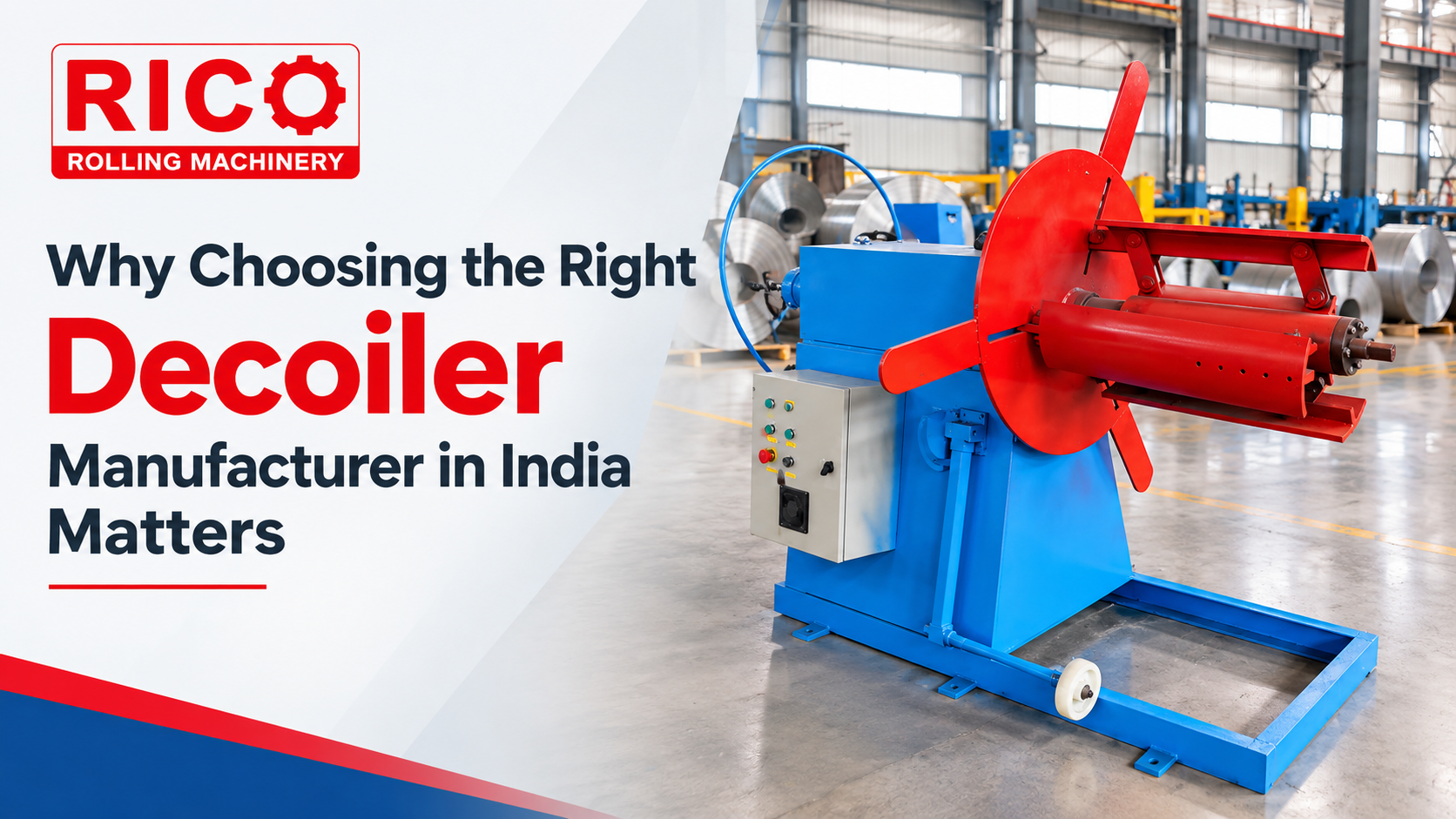
In today’s metal processing industry, efficiency, precision, and reliability are essential to maintaining consistent production quality. A decoiler machine plays an important role in feeding metal coils smoothly into production lines for applications such as sheet metal fabrication, roll forming, stamping, and industrial manufacturing. Choosing the right Decoiler Manufacturer in India can help businesses improve productivity, reduce material wastage, and maintain smooth production operations.
With several manufacturers and suppliers available in the Indian market, selecting a reliable partner requires careful consideration of machine quality, technical specifications, durability, and after-sales support. Understanding these factors can help businesses make an informed investment that supports their long-term production goals.
What Is a Decoiler Machine?
A decoiler machine, also known as an uncoiler, is industrial equipment designed to hold and unwind metal coils in a controlled manner. It supplies metal sheets or strips to downstream machinery without unnecessary interruptions.
Decoilers are commonly used in industries that process steel, stainless steel, aluminium, and other coil-based materials. Depending on the application, machines may feature manual or motorized operation, hydraulic coil expansion, adjustable speed, and different load capacities.
A suitable decoiler helps maintain a consistent material feed, reduces manual handling, and supports efficient operation across manufacturing processes.
Why Choosing the Right Decoiler Manufacturer in India Matters
Selecting the right manufacturer is not just about purchasing a machine. It is about finding equipment that matches your production requirements and delivers reliable performance over time.
1. Ensures Consistent Machine Quality
Machine quality directly affects production efficiency and the reliability of the manufacturing process. A well-designed decoiler should provide stable coil support, controlled unwinding, and dependable operation under the intended working conditions.
A reliable Decoiler Manufacturer in India should pay attention to material selection, structural strength, component quality, and manufacturing standards. Consistent build quality can help minimize unexpected breakdowns and maintain smoother production.
2. Improves Production Efficiency
In metal processing, delays in feeding material can affect the entire production line. A suitable decoiler supports a steady supply of metal strips to equipment such as roll forming machines, presses, and cutting systems.
Choosing a machine with the appropriate operating speed, coil capacity, and feeding arrangement can help reduce unnecessary production interruptions. It also allows businesses to coordinate the decoiler with other machinery for a more efficient workflow.
3. Reduces Material Wastage
Incorrect coil handling, uneven unwinding, and unstable material feeding can lead to damaged sheets, scratches, or production inconsistencies.
A properly designed decoiler helps control the unwinding process and maintain better material handling. Depending on the machine configuration and production setup, this can reduce avoidable wastage and improve the utilization of raw materials.
For manufacturers working with expensive metals or large-volume coils, minimizing material loss can contribute to better cost management.
4. Provides the Right Machine Specifications
Every manufacturing operation has different requirements. Coil weight, internal and external coil diameter, strip width, material thickness, and production speed can vary significantly between applications.
An experienced manufacturer can help identify the appropriate machine configuration based on these factors. Selecting the right specifications helps avoid problems associated with insufficient load capacity, unsuitable coil dimensions, or incompatibility with existing production equipment.
Before purchasing, businesses should clearly communicate their operating requirements to the manufacturer.
5. Supports Workplace Safety
Metal coils can be heavy and difficult to handle manually. Improper equipment selection or inadequate coil support may increase operational risks.
A suitable decoiler should be designed for its specified load capacity and intended application. Features such as secure coil clamping, stable construction, appropriate braking arrangements, and suitable guarding can contribute to safer operation.
Operators should also receive proper training and follow the manufacturer’s instructions for loading, unloading, and running the equipment.
6. Lowers Long-Term Operating Costs
The initial purchase price is only one part of the total cost of owning industrial machinery. Maintenance requirements, spare parts, energy consumption, downtime, and expected service life also influence the overall investment.
Choosing a dependable Decoiler Machine Manufacturer in India can help businesses focus on long-term value rather than simply selecting the lowest-priced option.
A durable machine with accessible replacement parts and appropriate technical support may help reduce maintenance-related expenses and production losses over time.
7. Offers Reliable After-Sales Support
Even a well-built machine may require maintenance, adjustments, or replacement components during its service life. Access to technical assistance can help resolve issues efficiently and reduce extended downtime.
Before finalizing a supplier, ask about installation support, warranty coverage, spare parts availability, maintenance guidance, and response times for service requests.
A manufacturer that provides clear documentation and dependable customer support can make machine ownership easier for production teams.
Key Factors to Consider When Selecting a Decoiler Manufacturer in India
Before making a purchasing decision, evaluate manufacturers against your actual production requirements.
- Manufacturing experience: Review the manufacturer’s experience with decoilers and similar metal processing equipment.
- Load capacity: Confirm that the machine can safely handle your maximum coil weight.
- Coil dimensions: Check the supported internal diameter, external diameter, and strip width.
- Material compatibility: Ensure the machine suits the type and thickness of metal being processed.
- Drive and control system: Determine whether manual, motorized, or hydraulic operation is appropriate for your application.
- Machine integration: Verify compatibility with existing roll forming, stamping, slitting, or sheet processing equipment.
- Build quality: Assess the frame, coil-support mechanism, drive components, and safety features.
- Maintenance and service: Confirm the availability of spare parts, technical assistance, and warranty support.
- Customization options: Ask whether the manufacturer can accommodate specific production requirements.
Comparing these factors across potential suppliers helps businesses select equipment that meets their operational needs and budget.
Types of Decoiler Machines Used in Industrial Applications
Different manufacturing environments require different types of decoilers. The most suitable option depends on coil size, production volume, material characteristics, and automation requirements.
Manual Decoiler
Manual decoilers are generally used for lighter coils and applications where basic material feeding is sufficient. They can be suitable for smaller workshops and operations with relatively low production requirements.
Motorized Decoiler
Motorized decoilers use a powered drive to unwind coils, supporting more controlled material feeding. They are commonly considered for production lines where consistent operation and reduced manual effort are important.
Hydraulic Decoiler
Hydraulic decoilers can provide powered coil expansion and other hydraulic functions, depending on the design. They are often considered for applications involving heavier coils or more demanding material handling requirements.
Heavy-Duty Decoiler
Heavy-duty decoilers are designed for applications requiring higher load capacities and robust construction. Their suitability depends on the coil specifications, operating conditions, and the manufacturer’s rated capacity.
Businesses should evaluate each machine type according to their actual production requirements rather than selecting equipment based on its category alone.
Industries That Use Decoiler Machines
Decoilers support a wide range of industrial processes involving metal coils. Common applications include:
- Automotive manufacturing: Feeding metal strips for component stamping and forming.
- Construction and infrastructure: Supplying coils to roofing sheet and structural profile production lines.
- Electrical equipment manufacturing: Handling sheet metal used in enclosures and electrical components.
- Metal fabrication: Supporting cutting, pressing, bending, and forming operations.
- Appliance manufacturing: Feeding sheet metal used in equipment housings and structural parts.
- Steel processing: Supplying material to compatible slitting, leveling, and coil-processing systems.
The machine configuration should match the specific material handling and production requirements of each industry.
Why Indian Manufacturers Are an Important Option
India has a broad industrial machinery sector serving metal fabrication, steel processing, construction, automotive, and other manufacturing industries. Working with an Indian decoiler manufacturer may offer practical advantages, depending on the supplier and the buyer’s location.
These advantages can include easier communication, access to technical assistance, potentially shorter delivery distances, and more convenient coordination for installation or maintenance.
However, businesses should assess each manufacturer individually. Reviewing machine specifications, production capabilities, customer references, warranty terms, and service arrangements is essential before placing an order.
Common Mistakes to Avoid When Buying a Decoiler Machine
Avoiding a few common mistakes can help businesses make a more suitable investment.
- Choosing only by price: A lower purchase price may not reflect the machine’s long-term maintenance and operating costs.
- Ignoring coil weight: The machine’s rated capacity must safely accommodate the intended coil load.
- Overlooking production speed: The decoiler should work effectively with the speed and requirements of the connected equipment.
- Neglecting safety features: Coil loading, clamping, braking, and operator protection require careful evaluation.
- Failing to check compatibility: Confirm that the machine suits the existing production line and material dimensions.
- Ignoring after-sales service: Lack of timely technical assistance or spare parts can affect production continuity.
- Not clarifying specifications: Obtain a written quotation that clearly lists the machine configuration, capacity, accessories, warranty, and delivery terms.
Taking time to compare suppliers and verify technical details can help prevent costly purchasing mistakes.
Conclusion
Choosing the right decoiler manufacturer is an important decision for businesses involved in metal processing and industrial manufacturing. Machine quality, suitable load capacity, production efficiency, safety features, maintenance requirements, and after-sales support all contribute to the long-term value of the investment.
By evaluating these factors carefully, businesses can identify a Decoiler Manufacturer in India that understands their application requirements and offers equipment suited to their production operations. A well-matched decoiler can support smoother material feeding, better workflow management, and more reliable manufacturing performance.
Before making a final decision, compare technical specifications, discuss your production needs with potential manufacturers, and confirm the availability of service and spare parts. These steps can help you choose equipment that supports both current production demands and future business growth.
Frequently Asked Questions (FAQs)
1. What does a decoiler manufacturer in India do?
A decoiler manufacturer designs and produces equipment used to unwind metal coils and feed material into industrial processing lines. Depending on its capabilities, the manufacturer may also provide customization, installation guidance, and after-sales service.
2. How do I choose the right decoiler machine?
Consider coil weight, coil dimensions, material type, strip width, production speed, automation requirements, and compatibility with existing machinery. Also evaluate machine quality, safety features, warranty, and service support.
3. What is the difference between a decoiler and an uncoiler?
The terms decoiler and uncoiler generally refer to equipment that holds and unwinds a coil of material. Terminology may vary between manufacturers and industrial applications.
4. Which industries use decoiler machines?
Decoiler machines are used in metal fabrication, automotive manufacturing, construction material production, steel processing, electrical equipment manufacturing, and other industries that process metal coils.
5. Why is after-sales service important when purchasing a decoiler?
After-sales service helps businesses get technical support, maintenance guidance, and replacement parts when needed. Reliable support can reduce extended downtime and help maintain production continuity.